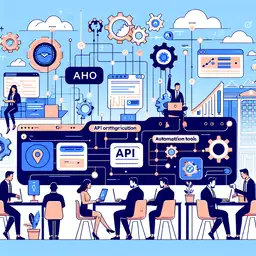
Optimising API-Heavy Workflows: A Guide for South African Businesses in 2026
In South Africa's fast-evolving digital landscape, optimising API-heavy workflows is essential for businesses handling high volumes of data integrations, especially with the rise of cloud computing and AI-driven automation. As South African companies make AI business-as-usual in 2026,…

Optimising API-Heavy Workflows: A Guide for South African Businesses in 2026
In South Africa's fast-evolving digital landscape, optimising API-heavy workflows is essential for businesses handling high volumes of data integrations, especially with the rise of cloud computing and AI-driven automation. As South African companies make AI business-as-usual in 2026, mastering API optimisation ensures operational agility amid infrastructure challenges and rising demands for efficiency.
Why Optimising API-Heavy Workflows Matters for South African Businesses
South African enterprises increasingly rely on APIs for everything from CRM integrations to e-commerce and marketing automation. With cloud computing enabling geographic independence, businesses can stay agile without heavy infrastructure investments.[1] However, unoptimised APIs lead to latency, high costs, and scalability issues—problems amplified by local network constraints.
In 2026, a high-searched trend like AI workflow automation is transforming operations. Marketing teams, for instance, use AI to automate lead scoring and content optimisation, often powered by API calls to external services.[2] For South African firms, this means optimising API-heavy workflows to support AI without bottlenecks.
- Reduce latency: Faster API responses improve user experience in real-time apps.
- Cut costs: Efficient workflows lower cloud bills and server loads.[1]
- Boost scalability: Handle growth in e-commerce or fintech without downtime.[3]
Explore how Mahala CRM integrations streamline API connections for local businesses (internal link).
Key Strategies for Optimising API-Heavy Workflows
1. Implement Caching and Rate Limiting
API-heavy workflows often involve repeated calls to third-party services. Caching stores responses locally, reducing calls by up to 80%.
const cache = new Map();

async function fetchWithCache(url) {
  if (cache.has(url)) {
    return cache.get(url);
  }
  const data = await fetch(url);
  cache.set(url, data);
  return data;
}
Pair this with rate limiting to avoid throttling, crucial for South African devs facing variable bandwidth.
2. Leverage Asynchronous Processing and AI Automation
Shift to async workflows using queues like RabbitMQ or AWS SQS. In 2026, AI-driven workflows automate decisions, such as invoice processing or lead qualification, via API orchestration.[2][3]
- Queue API requests for background processing.
- Use AI to prioritise tasks based on data signals.
- Monitor with process mining tools to spot inefficiencies.[4]
For marketing teams, AI automation workflows handle SEO planning and ad optimisation seamlessly.[2]
3. Adopt Microservices and API Gateways
Break monoliths into microservices with an API gateway (e.g., Kong or AWS API Gateway) for routing, auth, and monitoring. This is vital for South African SaaS firms scaling regionally.
Check Mahala CRM's API documentation for optimised endpoints tailored to African markets (internal link).
4. Monitor and Use Process Mining
Tools like Celonis or SAP Signavio reveal API bottlenecks in 2026.[4] Track metrics: response time, error rates, throughput. AI self-optimisation in tech stacks will be standard.[5]
Real-World Examples: API-Heavy Workflows in Action
South African e-commerce platforms optimise APIs for inventory syncs across suppliers. Marketing agencies use AI workflows for paid ad optimisation, auto-adjusting bids via API calls.[2] Employee onboarding automates via APIs for email setup and compliance checks.[3]
For deeper insights on AI-driven workflows, read this external guide: AI Automation Workflows for 2026.
Challenges and Solutions for South Africa
Local hurdles include load shedding and data costs. Solutions:
- Edge caching with CDNs like Cloudflare.
- Hybrid cloud setups for resilience.[1]
- Low-code AI platforms for quick wins.[3]
Conclusion
Optimising API-heavy workflows positions South African businesses for 2026 success, blending cloud agility, AI automation, and smart monitoring. Start small—cache your top APIs today—and scale to autonomous operations. Your competitive edge awaits in efficient, API-powered efficiency.